Your House Is 85 Degrees and Your Kids Are Miserable
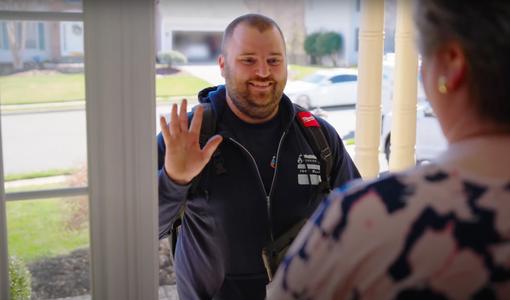
It’s 4 p.m. in July. The air hits you like a wall the second you walk in. Your air conditioning has stopped — and you have two kids, a dog, and zero patience for the runaround.
Sound familiar?
Here’s the thing: AC emergencies don’t happen on convenient Tuesday mornings. They happen on the hottest Friday of the year, right before a holiday weekend. And when it happens to your family, you need answers fast — not a voicemail, not a three-day wait, not a mystery charge when the bill shows up.
This guide will walk you through exactly what to do when your AC fails during a Virginia heat wave. You’ll know what to check first, when to call a pro, and how to keep your family safe while you wait.
Don’t Panic — But Don’t Wait Either
High indoor temperatures aren’t just uncomfortable. For young children, seniors, and anyone with a health condition, heat can become dangerous faster than most people realize.
Before you do anything else, take a breath. Then work through these steps in order.
Step 1: Check the thermostat. This sounds too simple. But it’s the first thing a technician will ask you. Make sure it’s set to “cool,” not “fan only.” Set it five degrees below the current room temperature and give it two minutes.
Step 2: Check your circuit breaker. A tripped breaker is one of the most common reasons an AC unit stops running. Look for a switch that’s flipped to the middle position — not fully on, not fully off. Reset it once. If it trips again, stop. That’s an electrical issue and you need a pro.
Step 3: Check the air filter. A severely clogged filter can cause the system to shut itself off as a self-protection measure. If it looks like a gray mat of dust, replace it. Then wait 30 minutes to see if the system restarts.
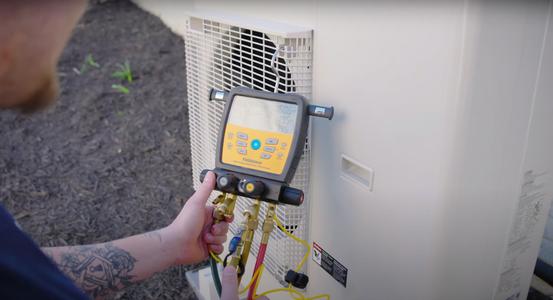
Step 4: Check the outdoor unit. Is it running at all? Is it making a loud buzzing or clicking noise but not starting? Is there ice forming on the lines? These are clues your technician will want to know.
If none of that fixes the problem, it’s time to call.
What’s Actually Wrong? Common Failures and What They Mean
Not every breakdown is a disaster. Some are quick fixes. Others require parts or a full replacement. Knowing the difference helps you ask better questions — and feel less lost in the conversation.
| Problem | Likely Cause | What Happens Next |
| System runs but doesn’t cool | Low refrigerant or dirty coils | Technician inspection required |
| Unit won’t turn on at all | Capacitor failure or bad contactor | Usually same-day repair |
| AC runs in short bursts, then stops | Oversized unit or frozen evaporator coil | Diagnosis needed |
| Loud grinding or screeching noise | Motor or blower issue | Stop running it; call immediately |
| Ice forming on lines or outdoor unit | Airflow blockage or refrigerant leak | Turn system off; run fan only |
| Thermostat shows normal but no airflow | Failed blower motor or control board | Part replacement needed |
Here’s what matters: running a broken AC system can make things worse. If you hear grinding, see ice, or smell something burning — turn it off. You could turn a $300 repair into a $3,000 one by letting it keep running.
How to Keep Your Family Safe While You Wait
This part matters, especially with kids in the house.
Close blinds and curtains on sun-facing windows. This alone can drop indoor temps by five to eight degrees. Get your family into the lowest level of the home — heat rises, and basements or ground floors stay cooler naturally.
Run ceiling fans counterclockwise in summer — this pushes the air downward and creates a wind chill effect. It doesn’t lower the temperature, but it makes the air feel cooler.
Freeze a few damp washcloths and keep them on hand for your kids. Cold water on the wrists, back of the neck, or forehead cools the body down faster than you’d think.
If indoor temps climb above 85°F and you have young children or anyone vulnerable at home, don’t tough it out. A library, a friend’s house, or a hotel room for one night is worth it.
Why the Contractor You Call Matters More Than You Think
Look, in the middle of a heat emergency, you might be tempted to call whoever shows up first in Google. That’s understandable. But it’s also when some companies take advantage.
Watch out for:
Vague pricing that only becomes clear after the work is done. A reputable contractor gives you an upfront quote before anything is touched. No exceptions.
Pressure to replace a system that might only need a repair. Always ask for a written explanation of why replacement is recommended over repair.
Unlicensed technicians. In Virginia, HVAC work requires a Class A contractor license. It’s worth asking.
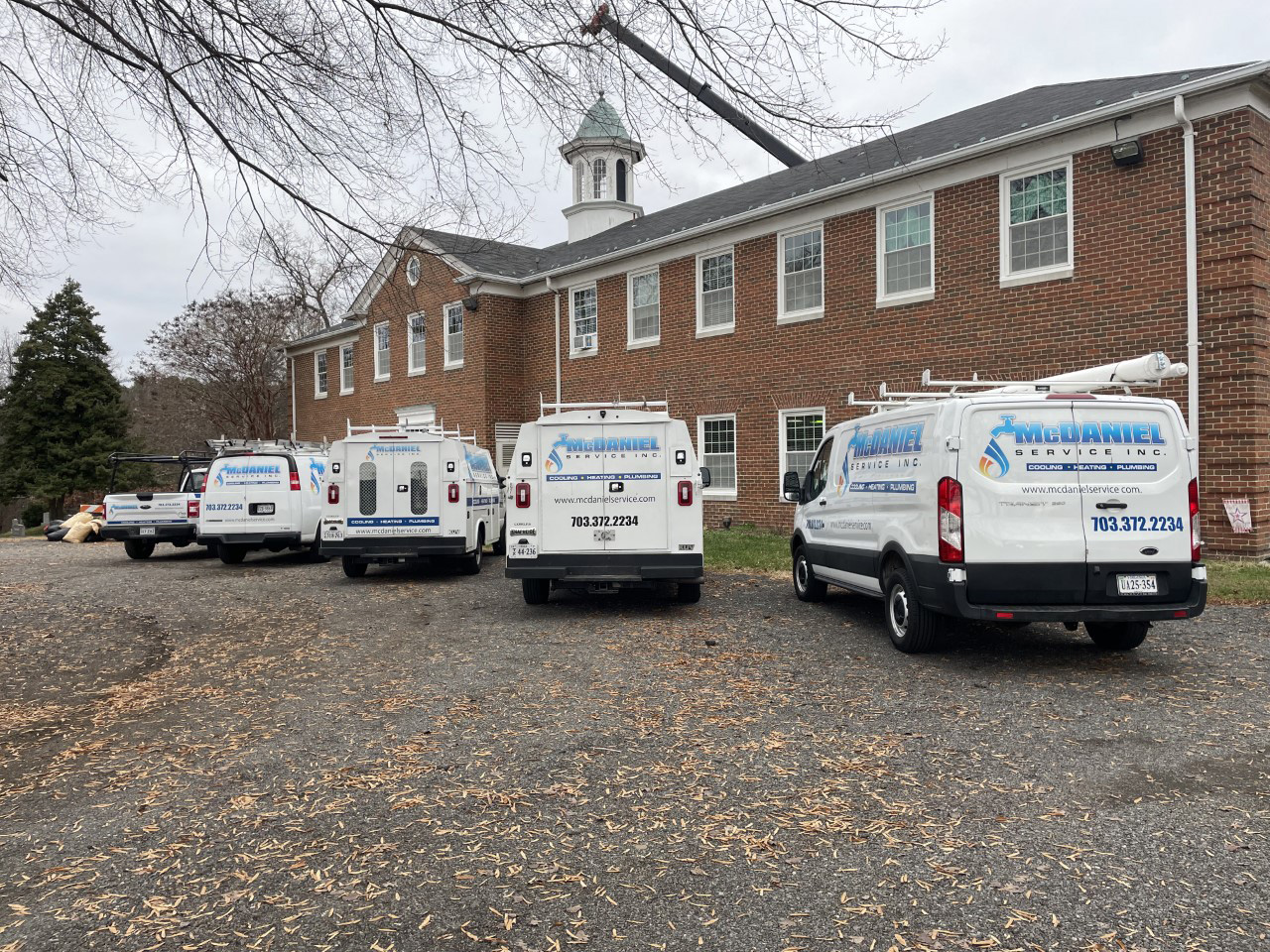
A company like McDaniel Service operates differently. All work is handled in-house — no subcontractors showing up to your home. You get the technician’s name before they arrive. The quote comes first, always. And they’re available for 24/7 emergency AC repair because a problem at 9 p.m. on a Saturday deserves the same response as one on a Tuesday morning.
That’s not how every company works. It should be.
Should You Repair or Replace?
This is the question nobody loves — because the honest answer is “it depends.” But here’s a simple framework that actually helps.
If your system is under 10 years old and the repair cost is less than half the price of a new unit, repair it. Modern systems are built to last 15–20 years with proper maintenance.
If your system is 12–15 years old and the repair is significant — compressor failure, refrigerant leak in an older unit, cracked heat exchanger — start running the numbers on replacement. An aging system that keeps breaking down costs more over time than a new, efficient unit.
If your system is over 15 years old and anything major fails, replacement is almost always the smarter financial call. Especially now that high-efficiency systems can significantly reduce your monthly energy bill.
Ask your technician this specific question: “If this were your home, would you repair or replace?” A technician who gives you a straight answer — even if it means a smaller job for them today — is one you can trust.
Frequently Asked Questions
How fast can I get emergency AC repair in Northern Virginia?
Response times vary by company and season. During peak summer heat, same-day service is the standard for true emergency providers. McDaniel Service offers 24/7 emergency availability, which means nights, weekends, and holidays. Call directly rather than booking online when you need urgent help — a live voice gets the process moving faster.
What should I tell the technician when I call?
Give them as much detail as you can upfront: when it stopped working, what you noticed first (noise, no airflow, running but not cooling), whether the outdoor unit is running, and whether you’ve reset the breaker. This isn’t just helpful — it can help them bring the right parts on the first visit.
Is emergency HVAC service more expensive?
Some companies charge after-hours rates that are significantly higher than daytime calls. Ask directly before they come out: “Is there an emergency service fee, and how is it applied to the final bill?” A transparent company will tell you clearly. McDaniel’s approach is to tell you exactly what it costs before anyone does anything — no surprises.
How can I prevent this from happening again?
Annual maintenance is the honest answer. A spring tune-up — before the heat hits — catches the small problems that become big failures in July. Dirty coils, worn capacitors, low refrigerant, clogged drains — a technician catches these for a fraction of what emergency repairs cost. Ask about maintenance memberships that include priority scheduling, which matters most when half of Northern Virginia’s AC systems are breaking at the same time.
The Contractor You Stop Searching For
Nobody wants to be the parent standing in a sweltering living room at 7 p.m., Googling “AC repair near me” and hoping for the best.
The good news: you don’t have to be.
When you find a contractor who shows up on time, tells you the price before they touch anything, sends you the technician’s name ahead of arrival, and follows up after the job — you stop looking. That’s the whole point.
If your AC is down right now, call McDaniel Service. They’ll tell you what’s wrong, what it costs, and who’s coming — before anything begins. That’s not a promise most contractors make. It’s one McDaniel keeps.
And if your system is running fine today, now is the right time to schedule a tune-up — before Virginia summer decides otherwise.