That Smell Near Your Furnace Is Not Something to Ignore
You walk past the furnace closet and catch it. A whiff of something off. Maybe it’s rotten eggs, maybe it’s hot and dusty, maybe it’s sharp like burning plastic.
Gas and burning odors are the two smells that make people stop and wonder whether their home is safe. And honestly, it’s scary to not know.
You’ll learn which smells mean “leave now,” which ones are normal, and which ones need furnace repair soon. You’ll also see what a good technician checks, so you can spot the difference between honest advice and a sales pitch.
First Things First: If You Smell Gas, Act Before You Read
Let’s get the urgent part out of the way. A rotten egg smell usually means natural gas is leaking. Gas companies add that smell on purpose so you’ll notice it.
Don’t flip a light switch. Don’t use your phone inside. Don’t try to find the leak yourself.
Walk out. Take everyone, pets included. Once you’re outside and away from the house, call 911 and your gas company. In much of Northern Virginia, that’s Washington Gas. Wait for them to say it’s safe before you go back in.
Only after that should you call a furnace repair company. Gas utilities handle the leak itself, and a licensed technician handles the furnace and the gas piping inside your home.
The Smell Everyone Forgets: The One You Can’t Smell
Here’s the thing that surprises people. Carbon monoxide has no smell at all. It can come from a furnace with a cracked part or a blocked vent, and you won’t notice it with your nose.
So if your head aches, you feel dizzy, or you feel sick only when the heat is running, take it seriously. Get outside into fresh air and call for help. A working carbon monoxide detector on each floor is cheap protection. Check the batteries when you change your clocks.
Not Every Burning Smell Is a Disaster
Now for the good news. Some smells are normal, and it helps to know which ones.
The first time you fire up the heat each fall, dust that settled on the heat exchanger and burners burns off. You’ll smell something warm and dusty for a short while. It should fade within an hour or so. If it lingers or gets stronger, that’s a different story.
The exception is anything sharp, chemical, or like melting plastic. That can point to a part overheating, a wire going bad, or something that fell into the furnace. Turn the furnace off at the thermostat and don’t keep running it just to see what happens.
A Quick Guide to Furnace Smells
This table isn’t a replacement for a pro’s eyes. It does give you a starting point.
| What you smell | What it might mean | What to do |
| Rotten eggs or sulfur | Natural gas leak | Leave the house, call 911 and your gas company |
| Dusty, warm, brief | Dust burning off after months of sitting idle | Ventilate and watch it; should fade within about an hour |
| Burning plastic or hot metal | Overheating part, failing motor, or an object inside | Turn the furnace off and schedule furnace repair |
| Electrical or “fishy” smell | Wiring or electrical component overheating | Shut off the furnace and call a licensed technician |
| Oily or kerosene-like | Fuel issue (more common in oil systems) | Turn it off and call for service |
| Musty or damp | Moisture or mold in ducts or near the unit | Book an inspection; mention it when you call |
Why Smells Show Up in the First Place
Furnaces are simple in idea and tricky in practice. A burner lights gas, a heat exchanger warms up, and a blower pushes that heat through your ducts. Gas, air, electricity, and venting all have to work together.
When one piece slips, you get symptoms. A dirty burner can burn unevenly. A worn blower motor can overheat. A cracked heat exchanger can let dangerous gases escape into your air. A clogged filter forces everything to work harder, which can cook dust right off the parts.
Most of the time, the fix is small if you catch it early. That’s the whole point of acting on a smell instead of hoping it goes away.
What a Real Furnace Repair Visit Should Look Like
If you’ve been burned before, you might dread calling anyone. Maybe a tech scared you into a new system you didn’t need. It’s frustrating to feel pressured when you just want your family safe.
A good visit follows a pattern. The technician asks what you smelled and when. They check the burners, the ignition, the venting, the heat exchanger, and the gas connections. They test for carbon monoxide. Then they explain what they found in plain words.
At McDaniel Service, the promise is simple: you see the price and approve it before anyone touches a thing. Technicians also tell you what needs fixing now and what can wait. First-time customers can even get the diagnostic fee credited toward an approved repair. One recent customer, a first-time homeowner, praised her technician, Juan, for explaining what he saw and not upselling her on work she didn’t need.
That’s the standard to hold any company to. Ask for the explanation. Ask what happens if you wait. A trustworthy tech won’t flinch at those questions.
Repair or Replace? Here’s How to Think About It
Sometimes a smell leads to a bigger conversation. If your furnace is old, has needed repeated fixes, or has a cracked heat exchanger, repair may not make sense.
Age matters, but it isn’t everything. A well-kept furnace can run for many years. A neglected one can struggle sooner. The question to ask is whether the repair cost makes sense for the life you’d get back.
Look, this doesn’t work as a simple rule like “replace at 15 years.” Your home, your usage, and the part that failed all matter. A heat exchanger crack usually tips things toward replacement. A bad igniter or a dirty sensor usually doesn’t. If you want to see what newer options look like, you can browse furnace options and replacements without any pressure.
How to Cut Down on Scary Surprises
You can’t prevent every problem. You can catch most of them early, though.
Change your filter on schedule. A clogged one is behind more furnace trouble than people realize. Keep the area around the furnace clear, with no boxes, paint cans, or cleaning products stacked nearby. Test your carbon monoxide detectors, and don’t ignore a smell just because it went away.
The biggest habit is a yearly tune-up before cold weather. A technician cleans, tests, and spots worn parts while they’re still cheap to fix. If you like the idea of having someone who knows your home on a schedule, take a look at the McDaniel maintenance membership. It includes two heating and cooling inspections and one plumbing inspection each year, plus priority scheduling and a discount on repairs.
Gas lines matter here too. If your home has gas appliances beyond the furnace, a licensed pro can inspect and repair gas piping as part of keeping the whole system safe.
Why Experience Changes the Outcome
Furnace repair is one of those jobs where the person matters as much as the part. Anyone can swap a component. It takes experience to notice that a smell, a sound, and a scorch mark all point to the same cause.
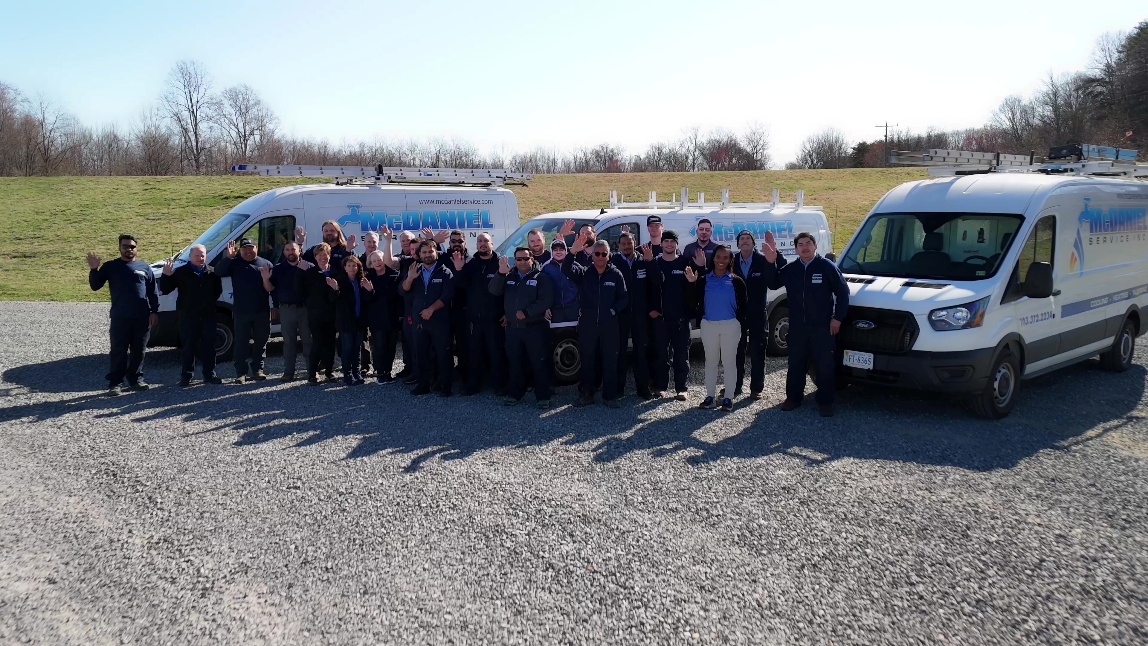
Bob McDaniel has worked in the trade since 1969, and the team today is 24 people with no subcontractors. Every tech is an employee, background-checked and trained in-house. That matters when you’re letting someone check your gas connections and venting. You get people you can recognize, a company that stands behind its work, and a licensed team working in Springfield, Lorton, and the surrounding area.
You can meet the people behind the trucks on the team page or read what neighbors say in the customer reviews. Think of McDaniel Service as a home care problem solver. The goal isn’t just fixing a furnace. It’s making sure you can sleep without wondering what that smell was.
When to Call for Help Right Now
If the smell is gas, you already know the steps. Get out, call 911, call your gas company.
If the smell is burning, shut the furnace off at the thermostat and book service. The company offers emergency heating service when you can’t wait. For less urgent concerns, such as a musty odor or a smell that comes and goes, you can learn about heating repair and maintenance or send a message to set up a visit.
Frequently Asked Questions
Is it normal for a furnace to smell like burning when I first turn it on?
A mild, dusty smell is normal for the first heating cycle of the season. It happens when dust on the burners and heat exchanger burns off, and it should fade within about an hour. If the smell is strong, chemical, or sticks around, turn the furnace off and schedule a repair visit.
Can a furnace leak gas without me smelling it?
Yes. Natural gas has an added odor, but your nose can miss it, especially if the leak is small or you’ve been in the house a while. Carbon monoxide has no smell at all. That’s why working carbon monoxide detectors are so important, along with yearly furnace inspections.
Should I keep using my furnace if I smell something odd?
No. If the smell is gas, leave and call 911 and your gas company. If it’s a burning, electrical, or plastic smell, turn the furnace off at the thermostat and call a licensed technician. Running it can turn a small problem into a bigger and more dangerous one.
How do I know a repair company isn’t trying to upsell me?
Ask them to show you the problem and explain why it needs fixing now. Ask what can safely wait. Get the price in writing and approve it before work starts. A company worth trusting will welcome all of those questions.
Don’t Let a Smell Keep You Up at Night
A rotten egg smell means leave and call for help. A brief dusty smell on the first cold day is usually fine. A sharp, burning, or electrical smell means turn the furnace off and get it checked.
And the invisible danger, carbon monoxide, is why detectors and yearly tune-ups matter so much. Catch small problems early, ask honest questions, and choose a team that explains things plainly.
If something near your furnace doesn’t smell right, don’t wait and wonder. Call McDaniel Service at 703-372-2234 or request an appointment online. You’ll get straight answers from people who care how your home feels, and how safe it is.